
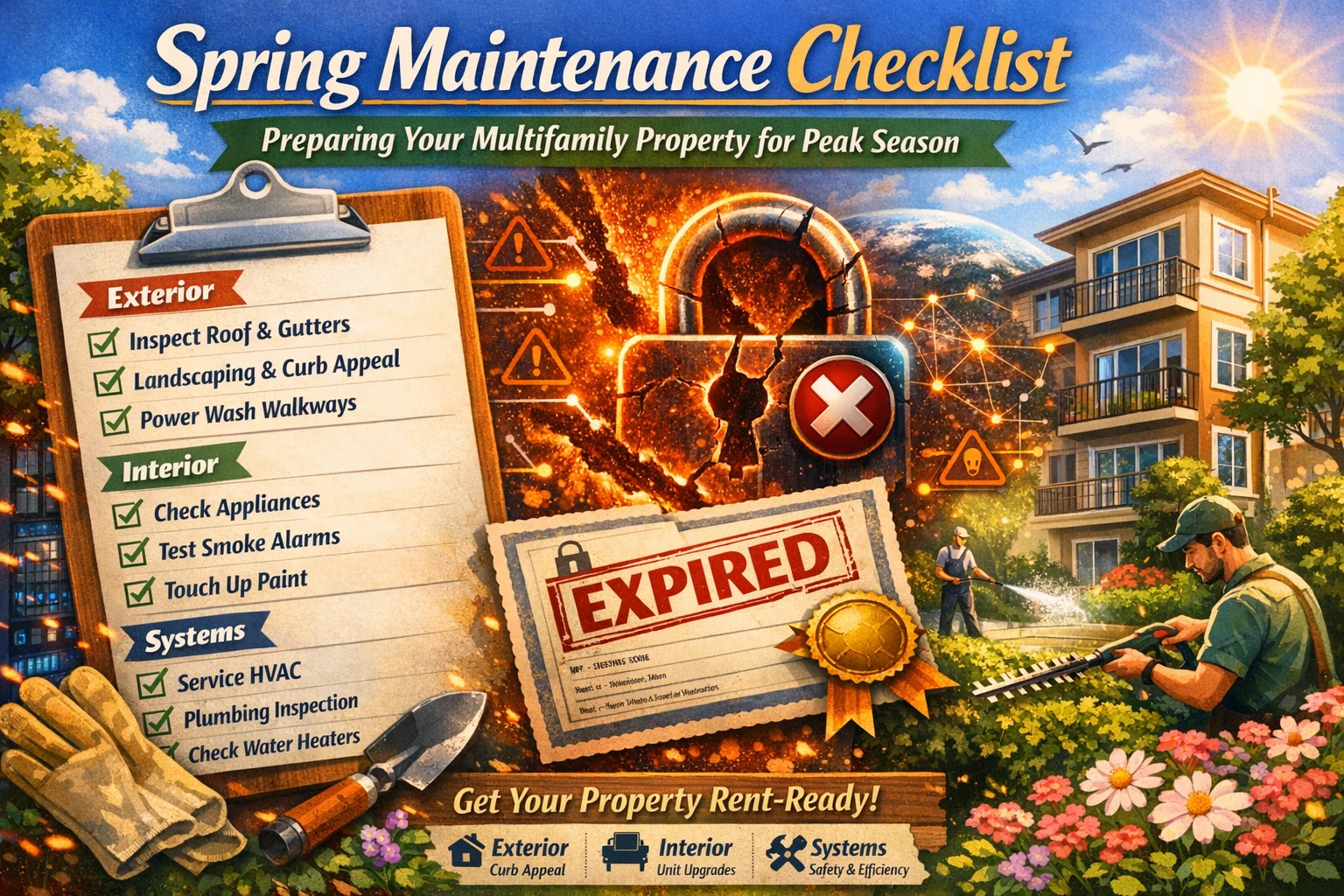
15 Spring Maintenance Tasks That Cut Vacancies and Boost Curb Appeal Fast
Every spring, property managers face the same crunch: the leasing calendar moves fast; prospective tenants are touring, and something — the HVAC, a damaged walkway, a unit that wasn’t properly turned over — isn’t ready.
Spring property maintenance isn’t just about fixing what broke over winter. Done right, it’s a competitive advantage. Properties that show well in March and April to lease faster, attract higher-quality applicants, and reduce costly mid-season emergency repairs.
This guide gives you a practical, room-by-room and system-by-system checklist built specifically for multifamily operators. Whether you manage 8 units or 800, you’ll leave with a clear action plan.
Your Spring Maintenance Checklist briefly
Before diving into the details, here’s the 30,000-foot view of your multifamily seasonal checklist. Think of spring maintenance in four zones:
- Exterior & Grounds — first impressions, safety, and structural integrity
- Interior Units — rent-ready prep and appliance function
- Building Systems — HVAC, plumbing, electrical
- Compliance & Safety — documentation, detectors, fire systems
Each zone has its own timeline. Exterior and systems work should start in late February or early March. Unit prep runs in parallel with turnover cycles. Compliance checks are non-negotiable and should be completed before your first lease signing of the season.
Exterior Work That Makes Your Building Leasing-Ready
Your building’s exterior is your first — and sometimes only — shot at a good impression. Curb appeal improvements don’t require a renovation budget. They require attention and timing.
- Inspect the Roof and Gutters
Winter is hard on roofs. Walk the perimeter and look for lifted or missing shingles, sagging sections, and debris buildup in gutters and downspouts. Clogged gutters cause water intrusion that leads to much more expensive interior damage.
- Repair Walkways, Parking Lots, and Common Area Surfaces
Freeze-thaw cycles crack concrete and asphalt. Beyond aesthetics, cracked walkways are a slip-and-fall liability. Walk every surface, note cracks larger than ¼ inch, and schedule patching before lease tours begin.
- Landscaping and Lawn Activation
Dead grass, overgrown shrubs, and bare flower beds signal neglect. Spring landscaping doesn’t need to be expensive. Mulch, edge the beds, and trim anything that grew wild over fall.
- Reseed thin lawn areas in early March
- Trim overgrown shrubs and remove winter debris
- Add seasonal color (annuals) near entrances for immediate visual impact
- Exterior Lighting Check
Walk the property at dusk. Replace burnt-out bulbs in parking areas, stairwells, and building entrances. Upgrade to LED if you haven’t — they last longer and reduce energy costs year-round.
Interior Unit Prep: Getting Every Unit Rent-Ready
Spring is peak turnover season. Units that aren’t rent-ready cost you days or weeks of lost rent — and during high-demand months, that’s a significant revenue hit.
- Complete a Full Unit Walkthrough Checklist
For every vacant or turning unit, run a standardized inspection before any lease is shown. Check:
- All appliances for functionality (stove burners, oven, dishwasher, refrigerator)
- Faucets and water pressure in kitchen and all bathrooms
- Toilet function and base seals
- Window and door locks and seals
- Flooring condition (scratches, stains, loose vinyl)
- Paint condition — scuffs, chips, and color consistency
- Paint Touch-Ups (or Full Repaints for High-Turnover Units)
Fresh paint is the single highest-ROI cosmetic improvement you can make to a rental unit. A fresh coat makes an older unit feel new, eliminates odors, and covers normal wear-and-tear efficiently.
- Deep Clean Common Areas and Laundry Rooms
Hallways, laundry rooms, mail areas, and lobbies accumulate grime over winter. A professional-grade cleaning in spring resets the baseline and signals to both current and prospective tenants that you run a well-managed property.
Building Systems: HVAC, Plumbing, and Electrical
Systems failures are expensive. Preventative maintenance in spring costs a fraction of emergency repairs in the middle of July.
- HVAC Filter Replacement and System Inspection
This is non-negotiable. Change all HVAC filters — both in individual units (if your property has split systems) and in central air handling units. Dirty filters reduce efficiency, spike energy bills, and shorten equipment life.
Spring HVAC checklist:
- Replace all filters (MERV 8 or higher recommended)
- Clean evaporator and condenser coils
- Test cooling function before the first heat wave
- Inspect refrigerant levels (call a licensed HVAC tech)
- Clean dryer vents in units — a fire hazard that’s frequently overlooked
- Plumbing Inspection and Outdoor Hose Bib Activation
If you shut off outdoor water for winter, spring is when you turn it back on — carefully. Check for pipe damage from freezing before pressurizing the system. Inside units, check under sinks for slow leaks that went unreported over winter.
- Outdoor hose bibs and irrigation systems
- Water heater temperature and anode rod condition
- Under-sink supply lines in kitchens and bathrooms
- Sump pump function (if applicable in your climate)
- Electrical Panel and Exterior Outlet Check
Have a licensed electrician inspect the main panel annually. For spring, focus on exterior GFCI outlets (near entrances, patios, and parking areas) — these are frequently damaged by moisture and winter debris.
Safety and Compliance: The Checks You Can’t Skip
Maintenance that protects your tenants also protects your liability exposure. These aren’t optional.
- Test Every Smoke and Carbon Monoxide Detector
Test all units. Replace batteries. Check out manufacture dates — most smoke detectors need full replacement every 10 years. Document your testing with photos or a signed checklist.
- Fire Extinguisher Inspection
Extinguishers in common areas, laundry rooms, and mechanical rooms need annual tagged inspections from a certified provider. Spring is a logical time to schedule this before your insurance renewal.
- Review and Update Your Emergency Contact and Vendor List
This is unsexy but essential. Spring is the right time to confirm that your emergency plumber, HVAC contractor, electrician, and general handyman are still available and have your current contact info. Finding a vendor during an emergency at midnight in August is not when you want to be searching.
Curb Appeal Projects That Pay for Themselves at Lease-Up
Beyond the checklist items, two targeted curb appeal improvements consistently deliver ROI at lease-up.
- Pressure Wash Building Exteriors, Sidewalks, and Fences
A pressure wash transforms a dingy building without a single dollar of renovation. Exterior siding, concrete walkways, fencing, and dumpster enclosures all benefits. Schedule this in late March or early April — right before tours peak.
- Photograph the Property After Completion
Once your exterior work and common areas are complete, update your listing photos. Fresh spring photos with green landscaping outperform winter or fall photos in online listings.
Build a Preventative Maintenance Calendar That Sticks
One-time spring maintenance is good. A preventative maintenance schedule that runs year-round is better. The operators who never scramble in peak season are the ones who treat maintenance as a system, not a reaction.
Four Seasonal Audit Windows
| Season | Key Tasks |
| Winter → Spring (Feb–Mar) | This checklist: exterior, systems, unit prep |
| Spring → Summer (May) | AC performance check, pest control, pool opening |
| Summer → Fall (September) | Weatherization prep, heating system test, gutter clearing |
| Fall → Winter (November) | Insulation audit, pipe freeze prevention, snow removal contracts |
Create a Vendor Roster Before You Need It
Build relationships with vendors before emergencies. A reliable HVAC tech, plumber, electrician, and landscaper — each vetted and with your property details on file — reduces emergency response time and costs.
Conclusion
Spring property maintenance isn’t glamorous — but it’s one of the highest-leverage activities a multifamily operator runs all year. The properties that lease fast in April and May are almost always the ones that started their prep in February.
Run through this spring property maintenance checklist systematically: exterior first, then units, then systems, then compliance. Don’t try to do it all in one week. Give yourself 4–6 weeks and track progress against a written schedule.
The operators who treat spring as a leasing asset — not just a repair season — consistently outperform those who don’t.